Which bonsai tree is best for beginners?
This question is frequently asked by newcomers to bonsai trees.
Well, if you are a beginner, you will be amazed to know that bonsai trees aren’t difficult to grow if you have enough dedication towards your bonsai tree and choose the right bonsai tree and size.
If you're interested, this article will help you choose bonsai trees for beginners that can survive even if you're starting from scratch. If you’re ready to buy, check out our bonsai tree for sale collection to pick a beginner-friendly specimen.
The success of a bonsai tree mainly depends on two factors: location and watering. Having said that, there are some bonsai species that are easy to care for — let us learn more about such bonsai species in detail.
Best Bonsai Trees for Beginners
1. Juniper

| Light | Bright, sunny light |
| Water | Allow soil to dry slightly before watering |
| Location | Location that receives 4 hours of direct sunlight |
| Soil | Well-draining, bonsai soil |
| Temperature | Can tolerate as low as 10°F |
| Humidity | High level of humidity |
| Pest and Disease | Mites, scales, aphids (use insecticides or miticide spray) and fungal rust disease |
| Pruning | Pinch back new shoots during spring and summer |
| Repotting | Under 10 years: every 2 years; mature: every 3–4 years |
| Fertilizer | Balanced liquid fertilizer |
| Color | Needles can be yellow, pale green, or dark green |
Juniper belongs to the conifer category and is popular because:
- Their small foliage fits nicely in a miniature bonsai aesthetic
- They can withstand heavy pruning
Juniper is often recognized as one of the easiest bonsai trees for beginners because they are durable in sunlight and versatile. Juniper can be raised outdoors or indoors, though they generally grow better outdoors. The juniper bonsai is forgiving — the plant can tolerate occasional neglect. The most common ways beginners harm juniper are overfeeding or under-feeding. Like most bonsai, they go partly dormant in winter and may not require fertilizer or frequent watering during that period.
| Pros | Cons |
|---|---|
| Easy to grow Low maintenance Pest resistant Long life span |
Can attract some insects and spiders |
2. Chinese Elm Bonsai tree

| Light | Lots of sunlight |
| Water | Keep the soil moist |
| Location | Sunny place |
| Soil | Decomposed granite, coarse sand, and crushed lava rock |
| Temperature | Stable 60–70°F |
| Humidity | Moderate |
| Pest and disease | Spider mites or scale (use insecticide) |
| Pruning | Best in late autumn |
| Repotting | Young: every 2 years; mature: longer intervals |
| Fertilizer | Organic balanced liquid fertilizer |
| Color | Small deep green leaves and attractive trunk |
Next on our list of best bonsai trees for beginners is the Chinese Elm. This bonsai suits both indoor and outdoor conditions. It is slow-growing, tolerates different environments, and doesn’t need much care. Place it in bright morning sunlight and shade in the afternoon. Its brown bark develops fissures with age and the small oval leaves give an elegant woodland appearance. Chinese elm rarely attracts pests (aside from spider mites) and is easy to trim and shape, making it stylish home decor.
| Pros | Cons |
|---|---|
| Ideal for bonsai art Affordable Easy to trim and shape |
Regularly needs aired outdoor time |
3. Ginseng Ficus

| Light | Abundant indirect light |
| Water | Moderate |
| Location | Warm location |
| Soil | Indoor plant soil mix, well-drained |
| Temperature | 60–75°F (15–25°C) |
| Humidity | High |
| Pest and disease | Leaf loss, yellowing, sticky white spots |
| Pruning | Prune in spring, pinch off new growth |
| Repotting | Every 2 years in spring |
| Fertilizer | Liquid fertilizer |
| Color | Dark green leaves, distinctive aerial roots |
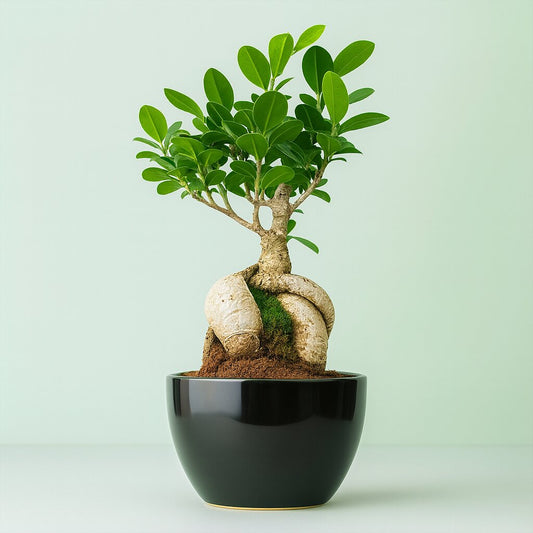
Ficus ginseng is very hardy and forgiving — a broadleaf evergreen with unique aerial roots and oval-shaped green leaves. Its thick grey trunk gives a sturdy look. Beginners enjoy Ficus ginseng because it tolerates low light and low maintenance. You can place it on an office desk, kitchen table, or windowsill. See our ficus bonsai and Ficus ginseng pages for details. A basic set of bonsai tools will help you shape and prune it.
| Pros | Cons |
|---|---|
| Easy to wire Decorative appearance Easy to prune Indoor & outdoor |
Deciduous behavior Sensitive to extreme temperatures Susceptible to spider mites |
4. Dwarf Jade bonsai plant

| Light | Full sun |
| Water | Water sparsely |
| Location | Indoors with plenty of natural sunlight |
| Soil | Succulent potting mix or sandy, gravelly garden soil |
| Temperature | Should not drop below 40°F |
| Humidity | Low humidity |
| Pest and Disease | Aphids, spider mites, root rot |
| Pruning | Spring or summer |
| Repotting | Every other year in spring |
| Fertilizer | Any normal fertilizer |
| Color | Thick green oval-shaped succulent leaves |
The Dwarf jade bonsai is a low-maintenance beginner choice. It retains moisture in leaves, tolerates occasional missed watering, and produces pink flowers. Known as the elephant bush, it keeps a miniature size and is easy to train and shape.
| Pros | Cons |
|---|---|
| Dwarfed size Affordable Minimal watering |
Susceptible to rot from overwatering |
5. Schefflera Bonsai

| Light | Full to partial sun |
| Water | Regular |
| Location | Sunny spot |
| Soil | Well-draining, sandy loam with slightly acidic pH |
| Temperature | 55–75°F |
| Humidity | High |
| Pest and disease | Fungus gnats, spider mites, aphids, leaf spot |
| Pruning | Prune when crowded or scraggly |
| Repotting | As required; usually in spring |
| Fertilizer | Liquid fertilizer; solid organic in summer |
| Color | Long, shiny, drooping oval leaves |
Known as the Hawaiian umbrella bonsai, Schefflera thrives indoors with low hassle and is an excellent pick for beginners. Position it around the house — kitchen, window, deck. The trunk does not branch as other bonsai do, which makes it an interesting and low-maintenance option. Learn more at Schefflera bonsai.
| Pros | Cons |
|---|---|
| Durable houseplant Easy to grow Needs less light Long-lived |
Leaf drop Root rot |
6. Cotoneaster

| Light | Partial sun |
| Water | Moderate |
| Location | Full sun to partial shade |
| Soil | Well-drained |
| Temperature | 35–59°F |
| Humidity | Relatively low |
| Pest and disease | Aphids, scale, caterpillars, borers, spider mites, fungal and bacterial diseases |
| Pruning | Prune older branches in spring; trim young shoots continuously |
| Repotting | Young: yearly in spring; mature: every 3–4 years |
| Fertilizer | Non-nitrogen fertilizer |
| Color | Glossy green leaves, white flowers, red berries |
Cotoneaster has glossy green leaves and attractive white flowers, producing colorful berries in autumn. It responds well to heavy pruning and can regain leaves after drought. Many species exist — choose deciduous or evergreen varieties depending on your climate and preference.
| Pros | Cons |
|---|---|
| Responds well to heavy pruning Attractive Less watering needed |
Prone to root rot |
7. Ficus Benjamina

| Light | Partial sun |
| Water | Frequent watering |
| Location | Outside or near a sunny/partly shaded window |
| Soil | Moist, well-drained |
| Temperature | 60–70°F |
| Humidity | Low |
| Pest and disease | Scale, aphids, bacterial leaf spots |
| Pruning | Regular trimming in growing season; heavy pruning in spring |
| Repotting | Every 2 years in spring |
| Fertilizer | Balanced liquid fertilizer |
| Color | Glossy green leaves |
Ficus Benjamina (weeping fig) is a popular domesticated bonsai, dwarf and subtropical with smooth grey bark and delicate branching. It adapts quickly to changes and is easy to prune, making it ideal for beginners. See our Ficus Benjamina guide for more details. The tree suits many Japanese bonsai styles but will need about twenty inches of height to hold pleasing proportions.
| Pros | Cons |
|---|---|
| Ideal indoor plant Easy to prune Beautiful foliage |
Prone to scale and mites |
8. Pomegranate

| Light | Bright direct light |
| Water | Regular |
| Location | Warm, sunny areas |
| Soil | Deep loamy soil |
| Temperature | Above 85°F |
| Humidity | Low |
| Pest and Disease | Aphids, citrus flat mites, leaf-footed bugs, leafroller caterpillars, mealybugs |
| Pruning | Trim new shoots in growing season |
| Repotting | Every 3–4 years in late winter |
| Fertilizer | Liquid bonsai fertilizer |
| Color | Glossy green leaves with orange-red edible fruits |
Pomegranate bonsai are popular for their striking flowers, edible fruit, and gnarled trunk. They are deciduous and can be grown outdoors year-round in warm climates or indoors part of the year — protect from frost. If you choose a pomegranate bonsai, expect a rewarding display of flowers and berries.
| Pros | Cons |
|---|---|
| Attractive Indoor & outdoor Can withstand low temperatures Low water requirements |
Mold in wet months Root rot risk |
9. Carmona Retusa

| Light | Bright sunny light |
| Water | Regular |
| Location | Well-lit location |
| Soil | Well-drained |
| Temperature | ~70°F |
| Humidity | High |
| Pest and disease | Aphids, scale, chlorosis, mealybugs, snails, red spider mites |
| Pruning | Leaves are small so frequent pruning is not necessary |
| Repotting | Every other year in spring |
| Fertilizer | Solid organic fertilizer |
| Color | Small dark-green leaves, small white flowers |
The Carmona Retusa (Fukien Tea) is indigenous to parts of Asia and popular with beginners as an indoor bonsai. It grows fast indoors, has glossy foliage and textured leaves, and often blooms white flowers that can form red berries. Read more at Carmona bonsai care.
| Pros | Cons |
|---|---|
| Easy to prune Attractive bark Red berries |
Root rot |
10. Japanese Maple

| Light | Sunny, partial sun |
| Water | Frequent watering |
| Location | Place where it receives morning or evening sun |
| Soil | Moist, well-drained |
| Temperature | Below 85°F |
| Humidity | More humidity aids growth |
| Pest and disease | Verticillium wilt and aphids |
| Pruning | Recommended in warm months, not early spring |
| Repotting | Every 2 years |
| Fertilizer | Organic or liquid bonsai fertilizer |
| Color | Red/yellow leaves in spring/fall; some varieties shift colors seasonally |
Japanese maples are prized for colorful leaves and relative ease of care. They are shade-tolerant, adapt well to bonsai shaping techniques, and create striking autumn colors. See Japanese maple bonsai for shaping tips.
| Pros | Cons |
|---|---|
| Do not need much sunlight Popular ornamental Easy to care Beautiful autumn colors |
Direct sun can damage leaves |
11. Banyan

| Light | Bright sunlight |
| Water | Regular watering |
| Location | Place it in a south-facing window to get 4–6 hours of direct sun |
| Soil | Mix of peat, perlite, and vermiculite |
| Temperature | 67–80°F |
| Humidity | Enjoys higher humidity |
| Pest and disease | Scale, caterpillars, weevil borers, leaf spots, yellowing leaves |
| Pruning | Regular pruning |
| Repotting | Every 3 years (ideally in spring) |
| Fertilizer | Organic liquid or diluted chemical fertilizer |
| Color | Long green leaves, greenish-yellow fruit |
Banyan Bonsai is also known as the common fig or Chinese banyan. Many varieties exist — tropical, evergreen, some deciduous — and many are naturally dwarfed. Banyan bonsai adapt to low light and humidity and are often grown as indoor bonsai. A distinctive feature is aerial roots that may hang from branches and can be trained over rocks. They prefer warmth and moisture but established trees tolerate drought.
| Pros | Cons |
|---|---|
| Hardy and adaptable Attractive aerial roots Fast-growing |
Leaf drop from drafts or sudden sun Often attacked by scale |
12. Adenium

| Light | Sunny, partial sun |
| Water | Regular |
| Location | Sunny southern windowsill |
| Soil | Well-drained mix |
| Temperature | Nighttime > 40°F |
| Humidity | Moderate |
| Pest and Disease | Mealybugs, spider mites, aphids |
| Pruning | Pinch and trim year-round; best in early spring |
| Repotting | Every 2 years |
| Fertilizer | Liquid or slow-release; bone meal for phosphorus |
| Color | Pink/white/red/black trumpet flowers with bulbous base |
Adenium (Desert Rose) is a pretty, fast-growing succulent bonsai that tolerates dryness and is ideal for beginners. See Adenium bonsai care for more.
| Pros | Cons |
|---|---|
| Pretty Fast-growing Tolerant of dryness |
Attracts mealybugs, spider mites, aphids Root rot risk |
13. Rosemary

| Light | Full sun (6+ hours) |
| Water | Frequent watering |
| Location | Full sunlight area |
| Soil | Sandy, well-draining soil |
| Temperature | Above 30°F |
| Humidity | Moderate |
| Pest and Disease | Aphids, spittlebug, mealybugs, scale, root rot |
| Pruning | Light pruning any time |
| Repotting | At least once a year in spring |
| Fertilizer | High phosphorus or organic fertilizer |
| Color | Green leaves with blue/lavender flowers |
Rosemary makes an edible bonsai — shape it, prune for herbs, and harvest for the kitchen. Be careful with overwatering to avoid root rot.
14. Norfolk Island Pine

| Light | Direct bright light |
| Water | More in summer, less in winter |
| Location | Sunny south-facing windowsill in warm room |
| Soil | Peaty, sandy potting mix, slightly acidic |
| Temperature | 50–70°F |
| Humidity | High |
| Pest and disease | Mealybugs, scale, fungal disease |
| Pruning | Prune new buds in spring |
| Repotting | Every 2–3 years in spring |
| Fertilizer | Water-soluble balanced fertilizer |
| Color | Inward-curving green needles |
Norfolk Island pine is a popular houseplant despite its remote origin and is suitable for a variety of bonsai styles. It prefers steady sunlight and moderate watering.
15. Common Boxwood Bonsai

| Light | Full sun or shade |
| Water | Regular |
| Location | Outside in sunny or semi-shaded place |
| Soil | Sandy, loamy soil |
| Temperature | Around 50°F |
| Humidity | Relatively high |
| Pest and disease | Scale, boxwood mite, fungal disease |
| Pruning | Tolerates heavy pruning; do mid-spring |
| Repotting | Young: every 2 years; mature: every 3–4 years |
| Fertilizer | Solid organic monthly or liquid weekly in growing season |
| Color | Green leaves, pale wood trunk |
Common boxwood is a classic choice for bonsai shaping and pom-pom canopies. It is ideal for beginners keen on training and shaping. See our boxwood bonsai page for examples and care tips. If you choose to repot, allow 2–3 years between pots for best results.
| Pros | Cons |
|---|---|
| Drought tolerant Tolerates trimming Long lifespan |
Not frost-hardy |
FAQ
1. Which is the easiest bonsai tree to take care of?
Ficus bonsai is the most common and easiest to take care of. Other easy options include Carmona bonsai, dwarf jade, and Schefflera bonsai.
2. What temperature is too cold for bonsai?
Most tropical bonsai plants do not tolerate temperatures below 40–45°F. During cold weather, move tropical bonsai indoors.
3. How do I keep my Bonsai tree warm?
A greenhouse is ideal. Ensure the roots receive light and the plant is placed where temperatures stay warm.
4. When can I place my bonsai outside?
Place your bonsai outside throughout spring, summer, and fall, depending on species and local climate.
5. Why does my bonsai have brown leaves?
Browning leaves often indicate nutrient deficiencies such as iron, magnesium, or nitrogen.
6. How do I know when my bonsai needs repotting?
Inspect the roots — if they are root-bound (circling the pot), repotting is needed.
7. How do I know if I am overwatering my bonsai tree?
Yellowing leaves and shriveling small branches are common symptoms of overwatering.
Conclusion
At first, bonsai growing may seem challenging, but with practice you’ll fall in love with your bonsai tree. With proper care, some bonsai can last 15–30 years — and in the right conditions, even outlive you.
Which bonsai tree are you planning to grow? Let me know in the comments below.