


KYP — Know Your Plant
Common name: Ficus Microcarpa / Chinese Banyan. A hardy, glossy-leaved bonsai with strong aerial roots. Fast-growing, forgiving, and ideal for homes and balconies.
Beginner-friendly indoor–balcony bonsai. Light, watering rhythm, seasonal care, and recovery tips.
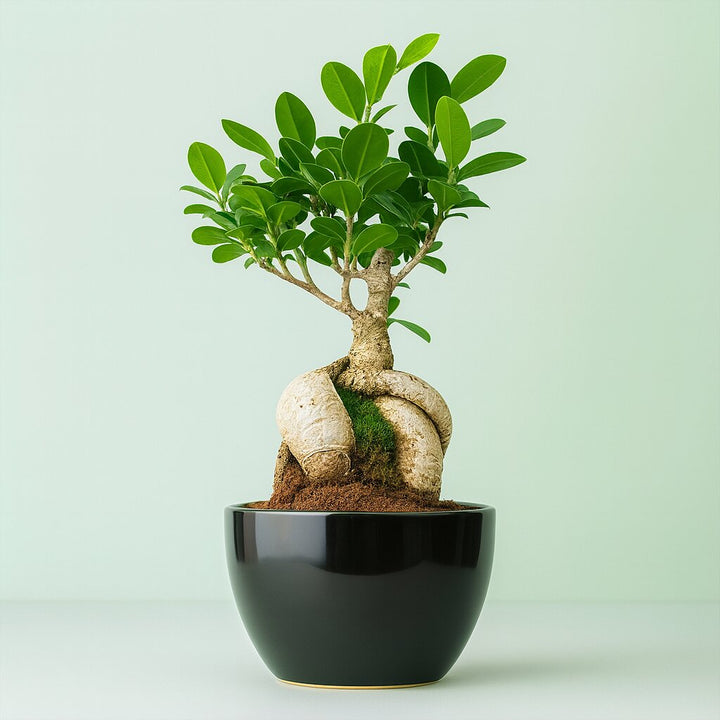
Common name: Ficus Microcarpa / Chinese Banyan. A hardy, glossy-leaved bonsai with strong aerial roots. Fast-growing, forgiving, and ideal for homes and balconies.
Bright, indirect light. Best near an east or west window, or a balcony with morning sun. Avoid cold drafts and deep shade.
Water deeply until it drains, then wait until the top 1–2 cm of soil dries. In warm weather this is usually every 2–4 days. Never let the pot sit in water.
Feed every 3–4 weeks during active growth (February–October) with a balanced bonsai fertiliser. Reduce feeding in winter.
Light pruning can be done year-round to maintain shape. Structural pruning and repotting are best in January–February. Repot young trees every 1–2 years; mature trees every 2–3 years using a free-draining bonsai mix.
Q: Leaf drop after delivery?
Normal stress response. Keep in bright shade for 7–14 days, water if soil is dry, and avoid fertiliser initially.
Q: Leaves turning yellow?
Usually overwatering or low light. Improve drainage and move to a brighter spot.
Q: Can it stay indoors?
Yes, with strong indirect light. For best health, give occasional outdoor balcony exposure.
Q: Pest problems?
Watch for scale, mealybugs, and aphids. Wipe leaves and treat early if noticed.
Why is Ficus Microcarpa good for beginners?
It tolerates indoor conditions, recovers quickly from pruning, and forgives minor watering mistakes.
How to recover from shipping stress?
Bright shade, correct watering, no fertiliser for two weeks, and patience. New leaves usually appear quickly.
Send a photo on WhatsApp for step-by-step help.
© Abana Homes — Need help? WhatsApp +91 93155 69090