


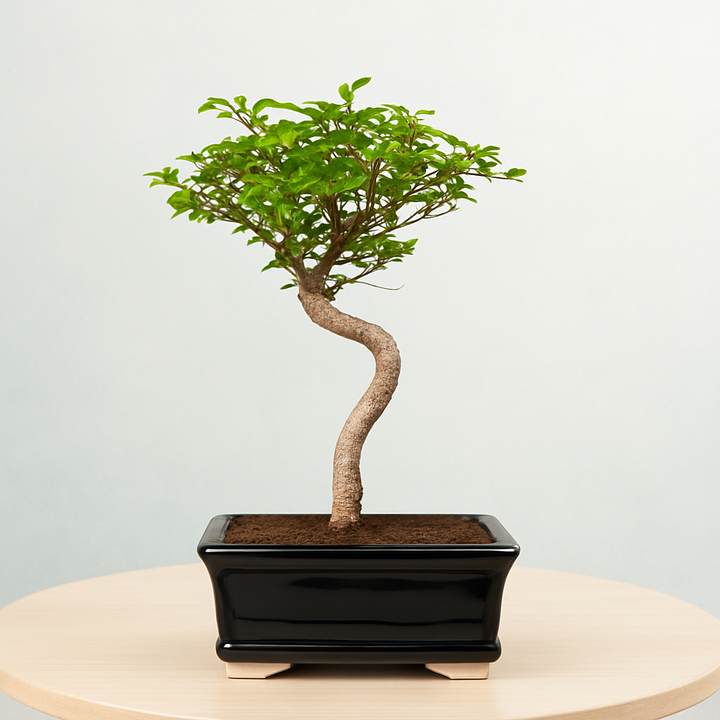
KYP — Know Your Plant
Common name: Chinese Elm (Ulmus parvifolia). A hardy, fine-leaved bonsai that tolerates a wide range of conditions. Semi-deciduous in cooler climates, it’s one of the best bonsai for beginners and balconies.
Practical, simple care for Chinese Elm bonsai — ideal for balconies, terraces and small gardens. Easy to follow month-by-month tips and quick fixes.
Common name: Chinese Elm (Ulmus parvifolia). A hardy, fine-leaved bonsai that tolerates a wide range of conditions. Semi-deciduous in cooler climates, it’s one of the best bonsai for beginners and balconies.
Full sun to partial shade. Ideal place: balcony, terrace, or garden with morning sun and some afternoon shade. Outdoors is best — Chinese Elm likes airflow and seasonal changes.
Allow the top 1–2 cm of soil to dry between waterings. Water thoroughly so water drains from the pot, then wait. In hot weather water more often; in cooler months reduce frequency.
Feed with a balanced NPK during the active season (Feb–Oct). Feed every 2–4 weeks. Reduce feeding from Nov–Jan when growth slows.
Trim to shape during growing months. Structural pruning is best in January–February before new growth. Repot young trees every 1–2 years; established trees every 2–3 years. Use a free-draining bonsai mix and trim roots carefully when repotting.
Q: What to do after receiving your Chinese Elm bonsai?
It’s normal to see leaf drop, yellowing, or sparse foliage after transit. The plant was likely stressed in the box. Check soil and water if dry. Press soil lightly to settle roots. Keep the tree in bright shade for 10–14 days (avoid harsh sun). Remove yellow leaves — they take energy from the plant. In most cases the elm recovers within two weeks and will put out new growth.
Q: Leaves turning yellow or falling?
Often caused by overwatering, poor drainage, or sudden changes in light. Confirm the soil drains well, move to a brighter spot if light is low, and reduce water if the soil stays soggy.
Q: How often should I repot a Chinese Elm?
Young trees: every 1–2 years. Established trees: every 2–3 years. Best time is January–February before growth resumes.
Q: New shoots are long and sparse (leggy)?
This usually means the tree needs more light. Move to a sunnier spot and do light pruning to encourage branching.
Q: How to manage elm during heavy monsoon?
Keep the pot in a position with good airflow and under a covered area to avoid constant downpour. Ensure soil drains freely and lift pots off the ground if the area floods.
How tolerant is Chinese Elm to different light levels?
Chinese Elm is very forgiving — it grows well in full sun to partial shade. For strong, compact growth prefer at least 3–5 hours of morning sun. Too little light causes leggy growth and fewer leaves.
Do you keep the elm fully outdoors or bring it inside sometimes?
We keep elm outdoors most of the year. It tolerates occasional indoor stays for short periods, but it performs best with regular outdoor light and seasonal changes. In winter keep it protected from frost and very cold nights.
Any special tip for repotting and root care?
When repotting, use a coarse, free-draining mix. Prune about one-third of the roots for young plants and slightly less for mature specimens. After repotting keep the tree in bright shade for 1–2 weeks and avoid strong sun until it settles.
Want a tailored diagnosis? Send us a photo on WhatsApp and we’ll guide you step-by-step.
Tip: group your elm with other plants to improve local humidity and airflow. 🌿
© Abana Homes — Need help? Send a photo on WhatsApp: +91 93155 69090